Theory of
Living Matter
We study the physics of cellular organization — how cells divide, move, and coordinate. Using analytical and computational methods, we bridge microscopic molecular interactions with large-scale biological phenomena.
Research Areas
Our work spans four interconnected themes in theoretical and computational biophysics.
Cytoskeletal Networks
The cytoskeleton is an active material driven out of equilibrium by molecular motors. We develop frameworks connecting microscopic interaction rules to the large-scale physical properties that enable cell shape changes and motility.
Learn more →Spindle Ultra-Structures
Cell division requires the faithful segregation of chromosomes. We integrate light microscopy with electron tomography data to understand the physics of mitotic and meiotic spindles at unprecedented resolution.
Learn more →Centrosome Physics
The centrosome organizes the microtubule cytoskeleton and anchors the mitotic spindle. We study how it grows, what forces that growth generates, and how those forces shape cell division.
Learn more →Synchronization in Living Materials
Molecular motors convert chemical energy into mechanical work. We investigate how they coordinate across biological scales — from individual proteins to beating cilia that pump fluid through tissues.
Learn more →Selected Publications
-
Clustering of the T-cell receptor complex may facilitate T-cell activation by stretching of CD3ζ cytoplasmic tailsEuropean Biophysics Journal, 2026
-
Entropic, active, and frictional forces in cytoskeletal crosslinkingPhysical Review Research, 2026
-
Three types of actomyosin rings within a common cytoplasm exhibit distinct modes of contractilityMolecular Biology of the Cell, 2025
-
Collective motion and pattern formation in phase-synchronizing active fluidsPhysical Review Letters, 2023
News
-
New FWF grant on chiral processes in the cytoskeleton — we are hiring!
We have been awarded a grant by the Austrian Science Fund (FWF) to decipher the physics of chiral processes in the cytoskeleton. With this funding we will be hiring two PhD students. If you have a background in theoretical physics or a related field and are excited about the physics of living matter, please get in touch. See the Join the Group section for how to apply.
-
Emeline Laborie awarded FWF ESPRIT Fellowship
Congratulations to Emeline Laborie, who has been awarded a prestigious FWF ESPRIT Fellowship for her work on the material properties of centrosomes. The ESPRIT programme of the Austrian Science Fund (FWF) supports outstanding early-career postdoctoral researchers. Congratulations, Emeline!
-
"Active mechanics of sea star oocytes" by Peter J. Foster, Alexandra Zampetaki, Jinghui Liu, Sebastian Fürthauer, and Nikta Fakhri has been accepted for publication in Physical Review Research. Using the surface contraction waves that sweep across sea star oocytes during meiosis, the study shows that cortical deformation depends on a balance between active contractile stress and cortical viscosity. That balance is set by the ratio of myosin to passive crosslinkers on each actin filament. Congratulations to all authors!
The Team
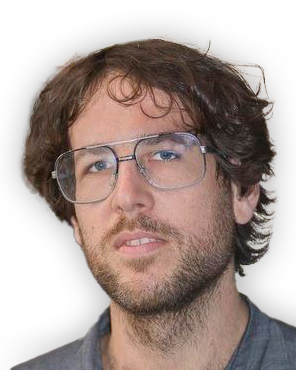
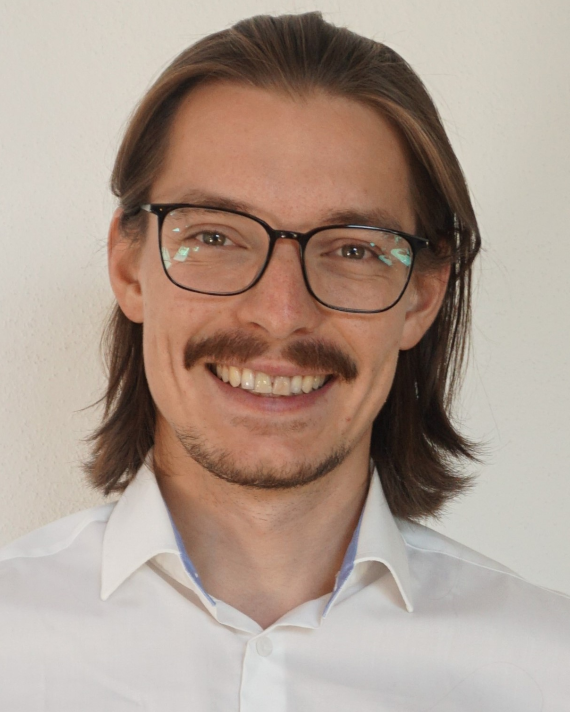
A diverse group of physicists and biophysicists at TU Wien's Institute for Applied Physics.


Join the Group
We are looking for motivated researchers with a background in theoretical physics, computational biology, or related fields. Our group offers an open, collaborative environment at the intersection of physics and biology.
Interested? Send a CV and a short statement of research interests to sebastian.fuerthauer@tuwien.ac.at.